
The Shift Changes. The Guest’s Experience Should Continue.
23rd November 2026
Tharene Van der Spuy
A guest asks reception for an early breakfast before leaving for a game drive. The receptionist makes a note, but the next shift does not know whether the kitchen has confirmed it.
By morning, the guest is explaining the request again.
The original conversation was handled politely. The difficulty arose when responsibility passed between people. For hotels and lodges reviewing service consistency, the shift handover is a practical place to start.
Record what happens next
A useful handover should help the incoming team act.
“Room 12 called about transport” leaves several questions unanswered. Has transport been requested? Has the supplier confirmed? Does the guest know the price?
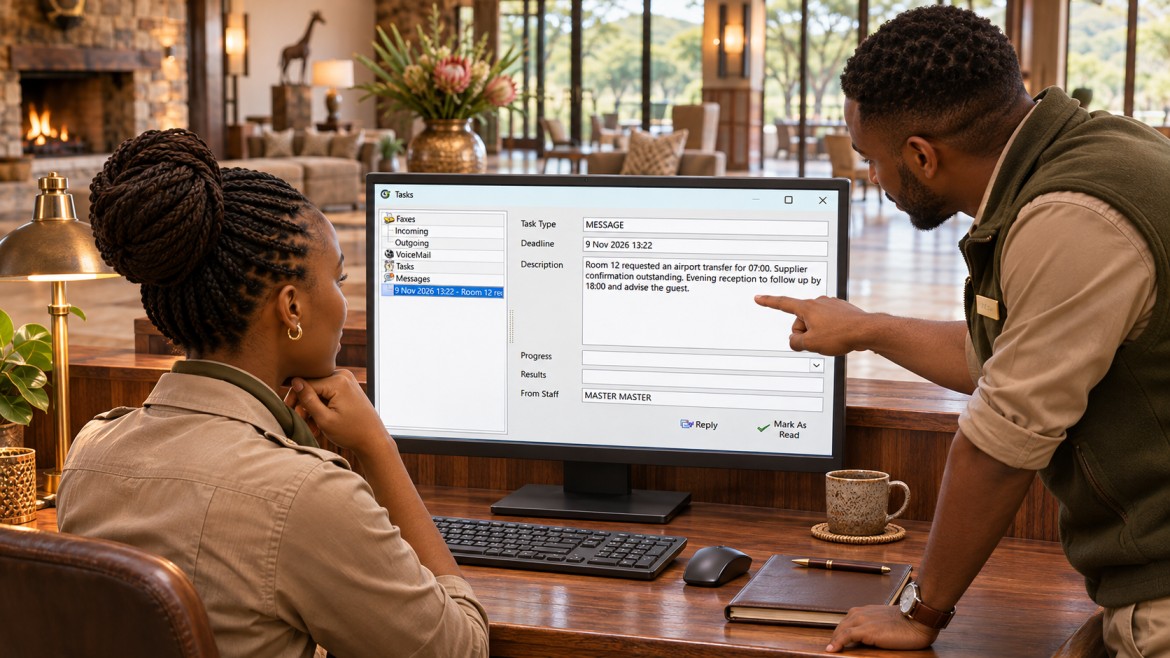
A clearer note might read: “Room 12 requested an airport transfer for 07:00. Supplier confirmation outstanding. Evening reception to follow up by 18:00 and advise the guest.”
The difference is the next action, the person responsible and the time for follow-up.
Separate a request from a confirmation
An early check-in request is not a promise that the room will be ready. A maintenance report does not mean the repair is complete.
Agree simple, consistent ways to describe progress. Staff should be able to distinguish between something requested, something being arranged and something confirmed.
Record what the guest has already been told. This helps the incoming team continue the conversation accurately and avoid making a commitment that another department cannot fulfil.
Include the departments that must deliver
A front-desk handover alone cannot resolve work that depends on housekeeping, maintenance or food and beverage.
Decide how those teams will receive relevant requests and how reception will know when an action is complete. Keep guest and room information in the agreed operational system, with access appropriate to each staff member’s role.
CiMSO’s INNkeeper covers reservations and front-office operations, while HOUSEkeeper supports room-status control. These tools provide operational information; the property still needs clear responsibilities for updating it and following through.
Bring follow-up tasks into the next shift
CiMSO’s TaskManager can help by allowing tasks to be scheduled to appear when a different user logs in to the system. This gives the incoming staff member a prompt to attend to an action carried over from the previous shift.
For example, a task could prompt the incoming receptionist to confirm the early breakfast arrangement with the kitchen and update the guest. Include the request, what has already been done and when the next action is needed.
Used alongside a clear handover process, TaskManager helps staff bring outstanding work to the next user’s attention. The person receiving the task still needs to act on it and record the outcome.
Make time to review open items
Protect a short handover period wherever staffing allows. Prioritise unresolved guest requests, time-sensitive arrangements and issues that could affect arrivals or departures.
The incoming team should have an opportunity to clarify anything unclear. A note has limited value if the person receiving it cannot understand what needs doing.
Then close the loop. When an arrangement is confirmed or a problem is resolved, update the record and tell the guest where appropriate.
For your next operational review, follow one guest request across a shift change. Check whether its status, owner and next action remain clear throughout. That small exercise can show exactly where the handover needs attention.

Nov. 23, 2026
Behind Every Successful Golf Day is a Connected Team
Nov. 23, 2026
The Shift Changes. The Guest’s Experience Should Continue.

Nov. 23, 2026
Sell the Feeling: Turning Your Lodge’s Setting into a Reason to Book

Nov. 13, 2026
A Better Round Starts on the Tee Sheet

Nov. 12, 2026
When Booking Details Become Bait: Protecting Guest Trust Before Arrival

Nov. 12, 2026
Beyond the Welcome Email: A New Member’s First 30 Days

Oct. 22, 2026
Get Ready for CiMSO Live Namibia 2026!

Oct. 22, 2026
Sleep Tourism: An Opportunity for Nature-Based Properties?

Oct. 20, 2026
Golf’s Five Million Acres: More Than Just Fairways
Oct. 17, 2026
A Taste to Take Home

Oct. 17, 2026
When Sustainability Becomes Smart Golf Course Management: Lessons from Operation Pollinator

Sep. 22, 2026